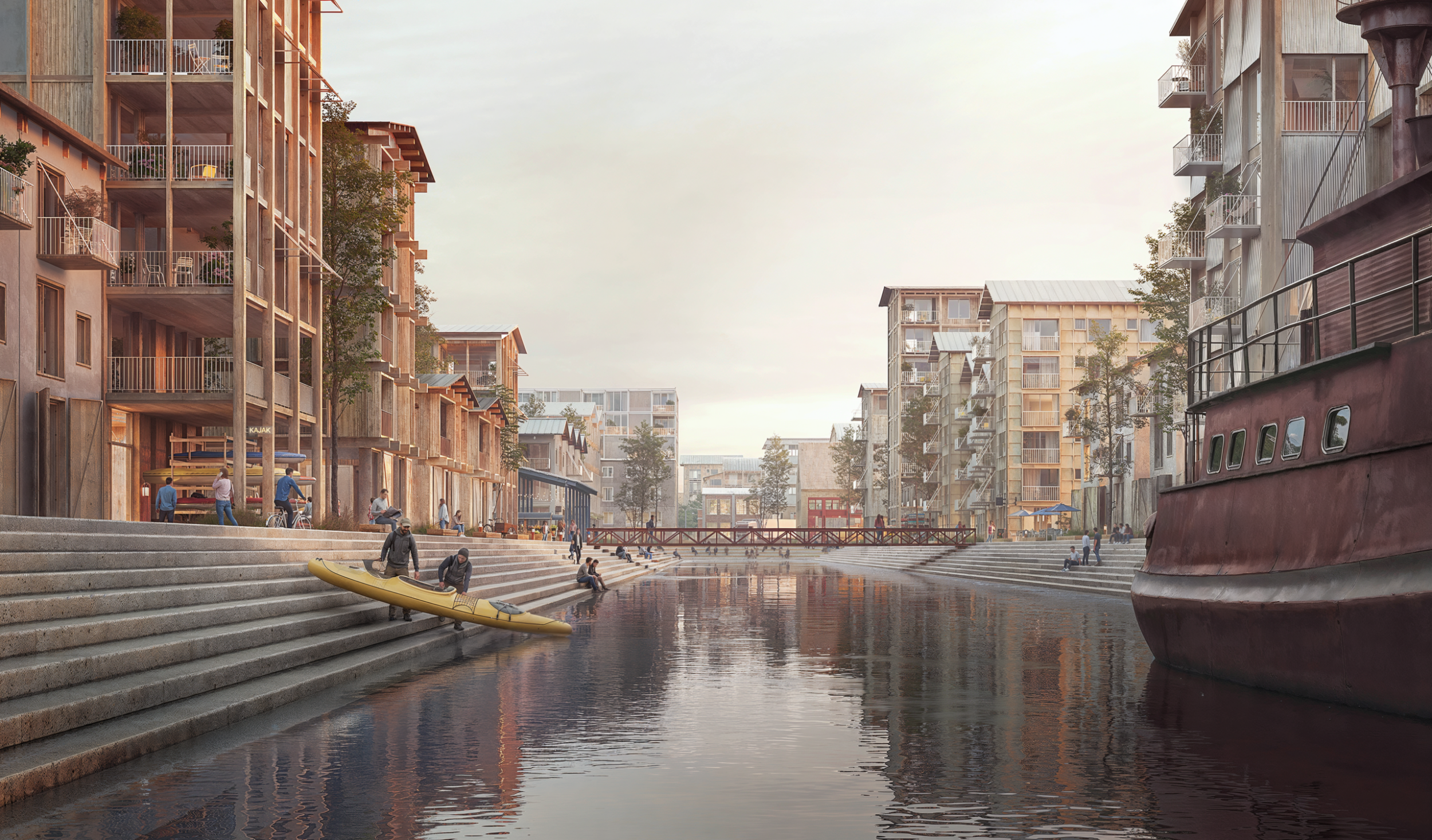
Refshaleøen
Once a shipyard at the edge of Copenhagen, Refshaleøen has always been a place of making. Today, that legacy persists in the site’s contemporary role as an incubator for a wide range of world-renowned cultural, scientific and gastronomic initiatives.
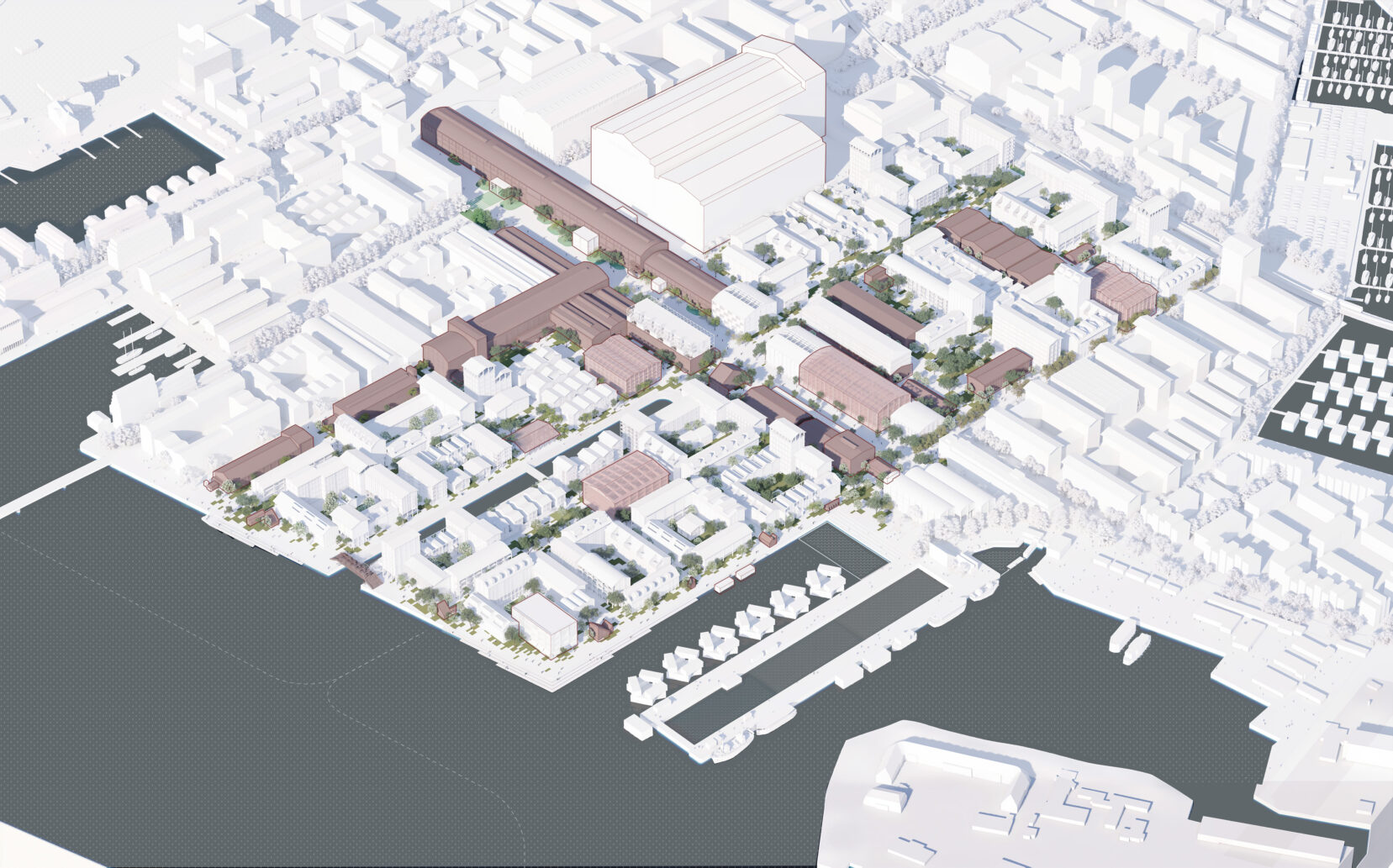
As part of Team Tredje Natur/Arup/BRIQ we were prequalified as one of five teams invited to develop a proposal for the future development of Refshaleøen. Our masterplan and structural plan proposal builds on the island’s continuity by framing Refshaleøen as a “byværft” or “city yard”: a place of ongoing city-making. This approach allows the area to retain its identity as a productive landscape while addressing broader urban challenges such as climate, social inclusion and the loss of local character. Maintaining and strengthening on-site production – not only of physical goods but also of community, culture and innovation – keeps supply chains short, local pride relevant and the commercial economy healthy.
To realise this vision, we brought together expertise across architecture, ethnology and retail economics. This interdisciplinary approach allowed us to define development principles, conduct ethnographic fieldwork, develop the urban design strategies, and establish a coherent aesthetic direction – all grounded in human scale. We engaged closely with a wide range of existing operators on the island, building partnerships that directly informed the design, placement and programming of key cultural and community platforms within the masterplan. In parallel, analysis of the existing building stock shaped new commercial typologies and signature formats that extend the architectural logic of the area while accommodating future needs.
Developing the structural plan and masterplan in parallel created a strong interplay between overarching principles and site-specific solutions. One of the outcomes was a framework of iterative neighbourhood modules organised around reimagined “docks” that anchor social life and infrastructure while remaining adaptable as development evolves.
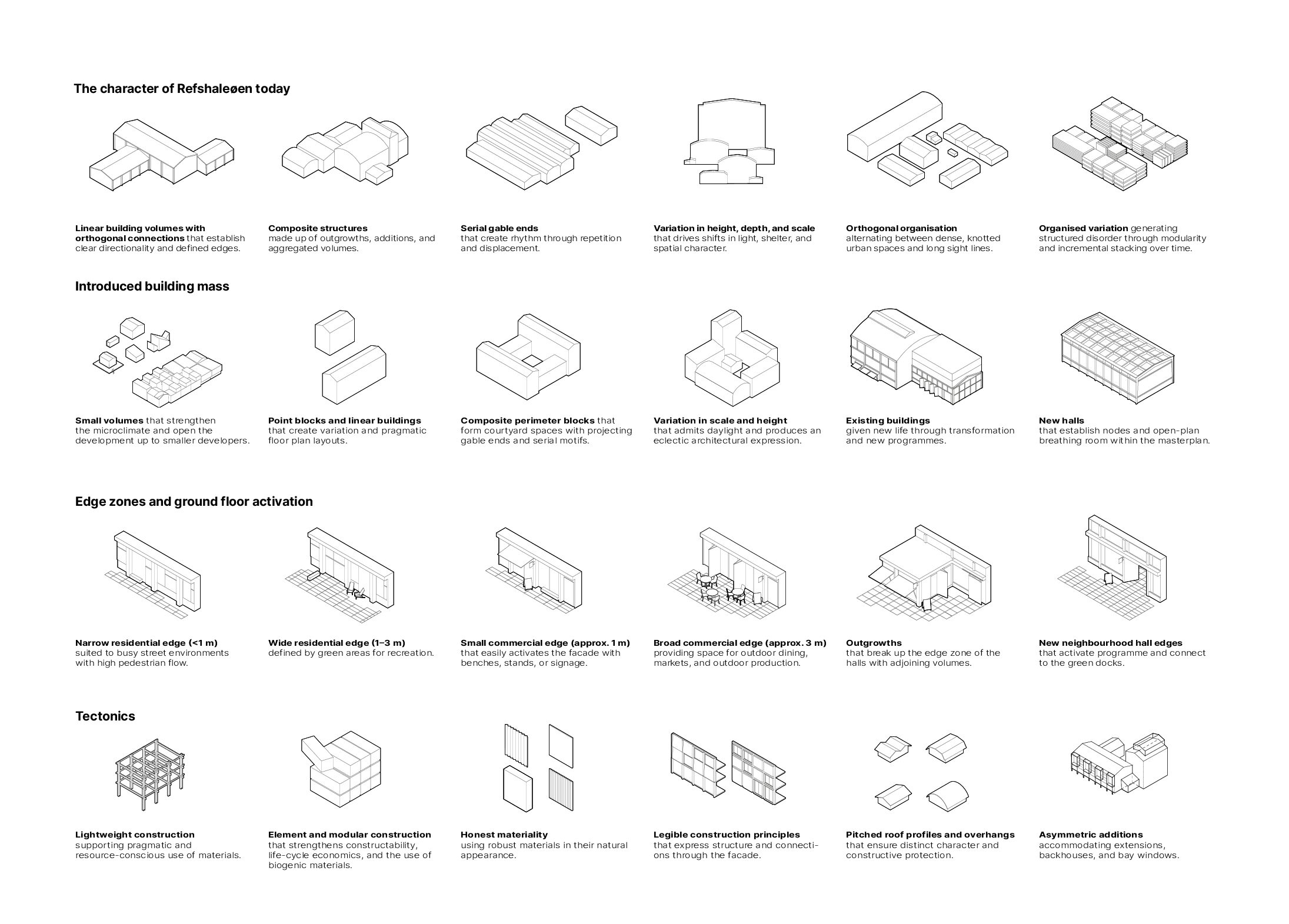
At the same time, the site is defined by a substantial existing building stock – from storage facilities and workshops to shipyards and personnel quarters. Rather than overriding these conditions, the masterplan builds directly on them. Based on our architectural analysis, we developed an architectural alphabet for Refshaleøen, rooting future interventions in an existing spatial expression shaped by practical needs and eclectic solutions.
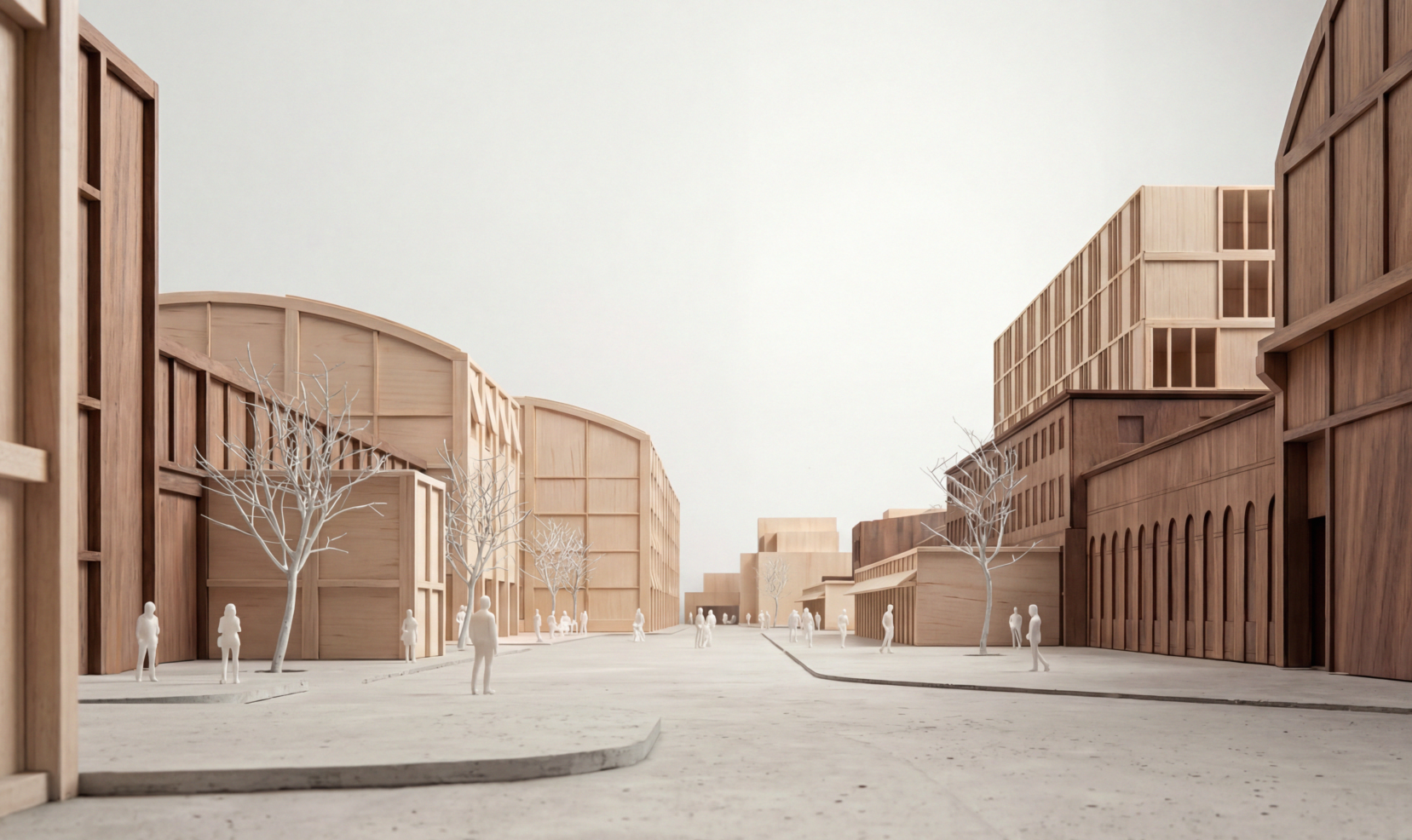
At masterplan level, distinct neighbourhoods anchored by strong local hubs emerge as a key organising principle. The area is structured into three quarters, each composed through different combinations of the architectural alphabet and each drawing its identity and name from its former function. In Værkstedskvarteret, for example, the design draws on the site’s industrial grammar, with open ground floors, large portal openings and clear shifts in scale that signal a public, working and inviting programme. The façades extend this workshop logic through a robust panel construction, where overlapping cladding creates depth, shadow and a rhythmic relief. The three neighbourhoods hinge onto the central street, Refshalevej, where visible production, new mixed formats and everyday facilities intersect – adding to Refshaleøen’s eclectic character, where large and small, high-end and hands-on sit side by side.
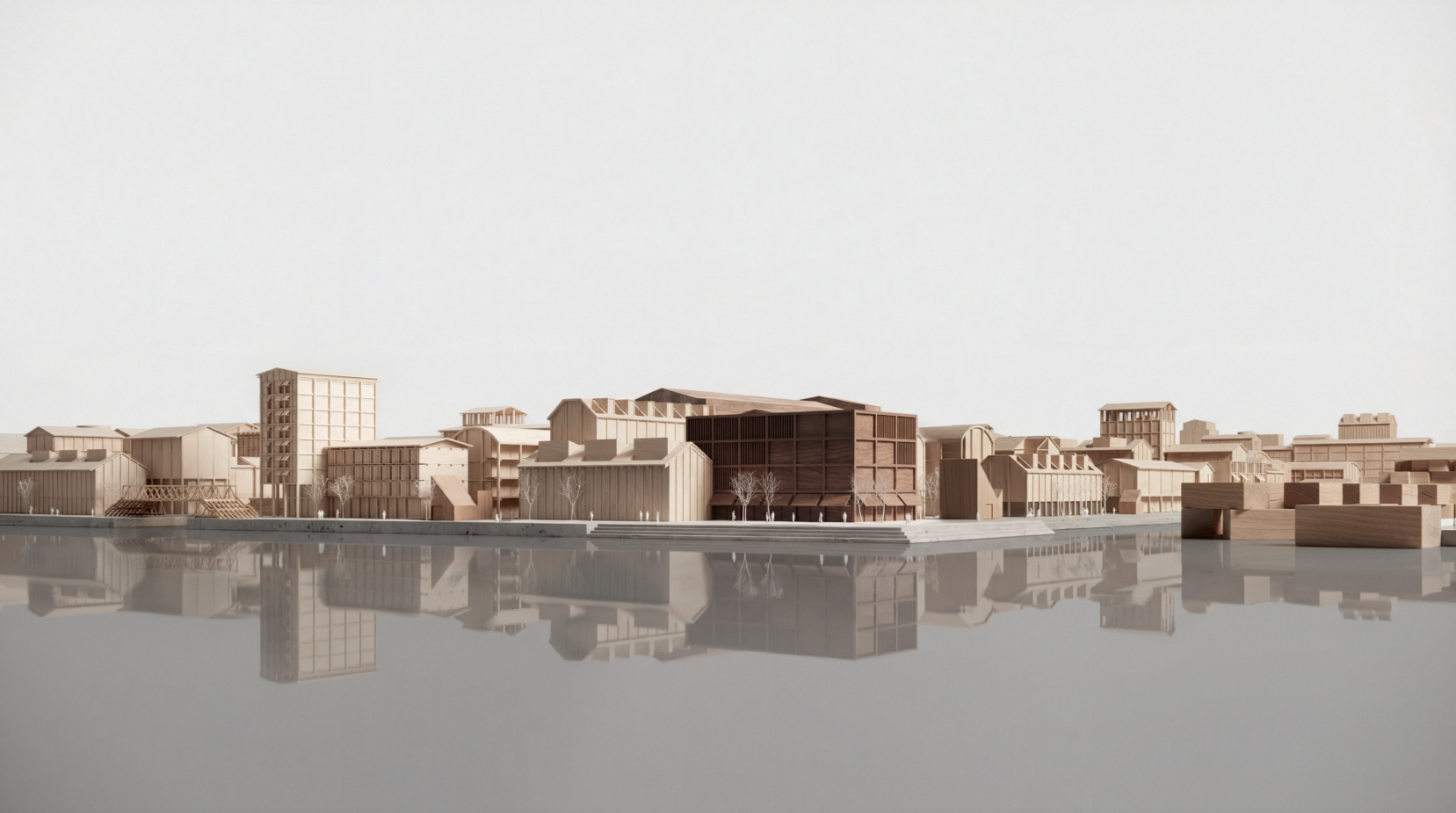
With deep respect for both its contemporary role and physical legacy, our team aimed to lay the groundwork for an evolved Refshaleøen – a dense, mixed district defined by new waterfronts and a bustling inner life. For those who will live, work and spend time on the island, Refshaleøen continues to act as a lighthouse for urban development in Copenhagen and beyond.
We didn’t win the structure plan and masterplan competition for Refshaleøen, but we’re grateful for the journey. We want to thank Refshaleøens Ejendomsselskab for the opportunity, and we are excited to see some of our key ideas and toolsets highlighted in the verdict as possible tracks for future development of the island.