Kopenhagen Konsulting
BRIQ has designed the interior for Kopenhagen Konsulting’s main office in Det Nye Marketenderi. Occupying the entire building across four floors and a roof terrace, the workspace has been shaped to support the daily life of its 68 employees. The project builds on BRIQ’s broader involvement in the area, including the architecture of the building itself as well as the urban strategy, space planning, transformation and activation of Den Røde By and Århusgadekvarteret.
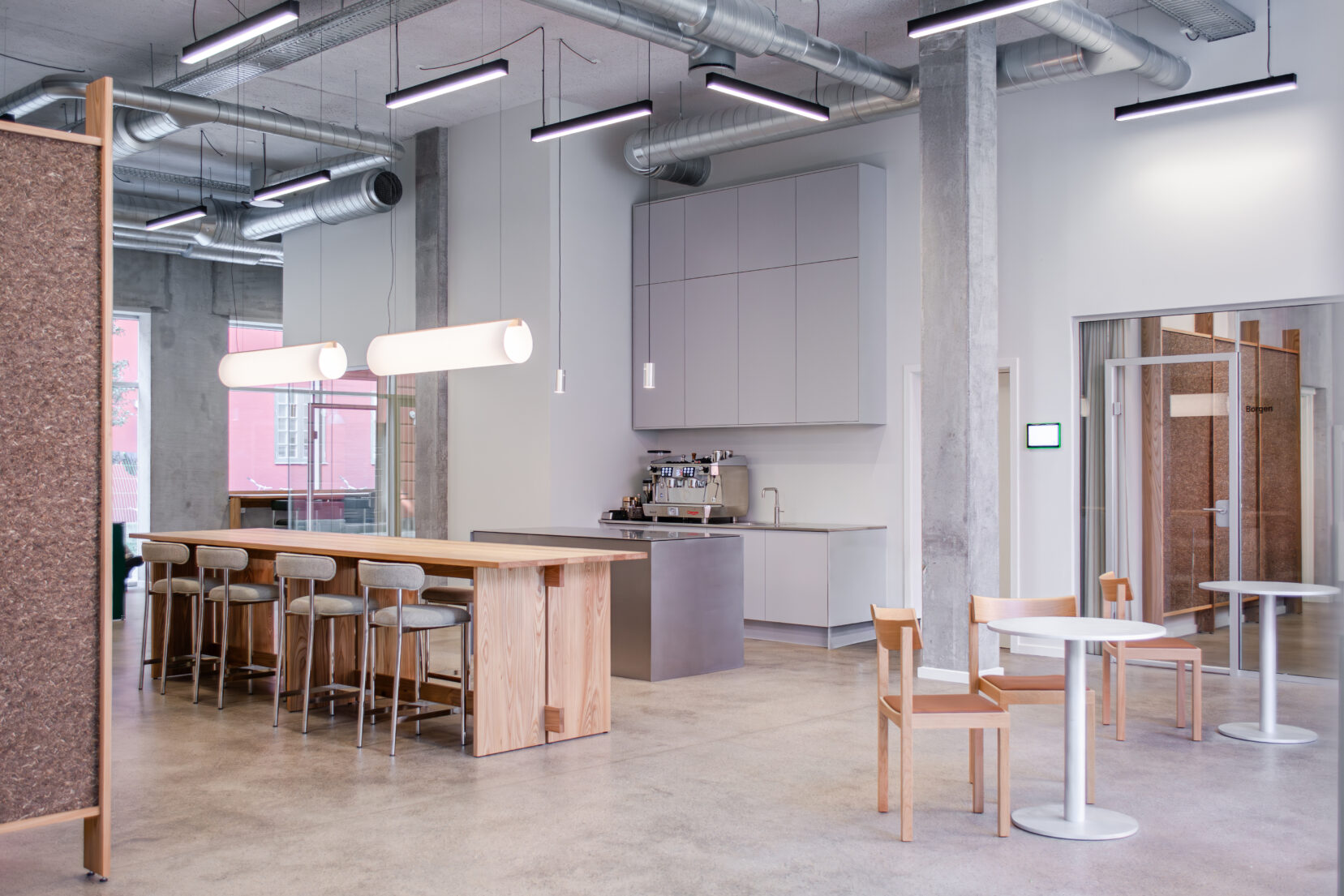
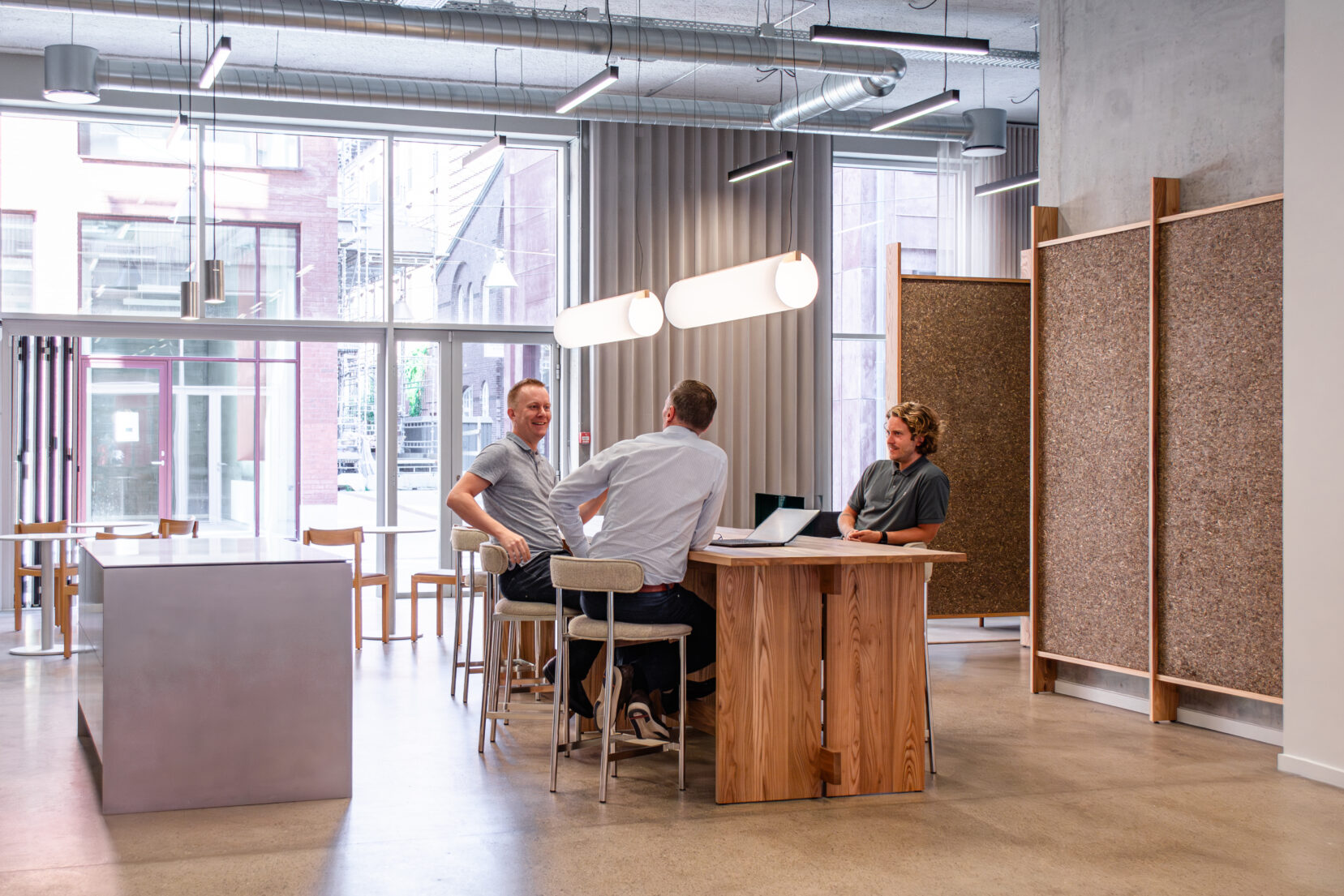
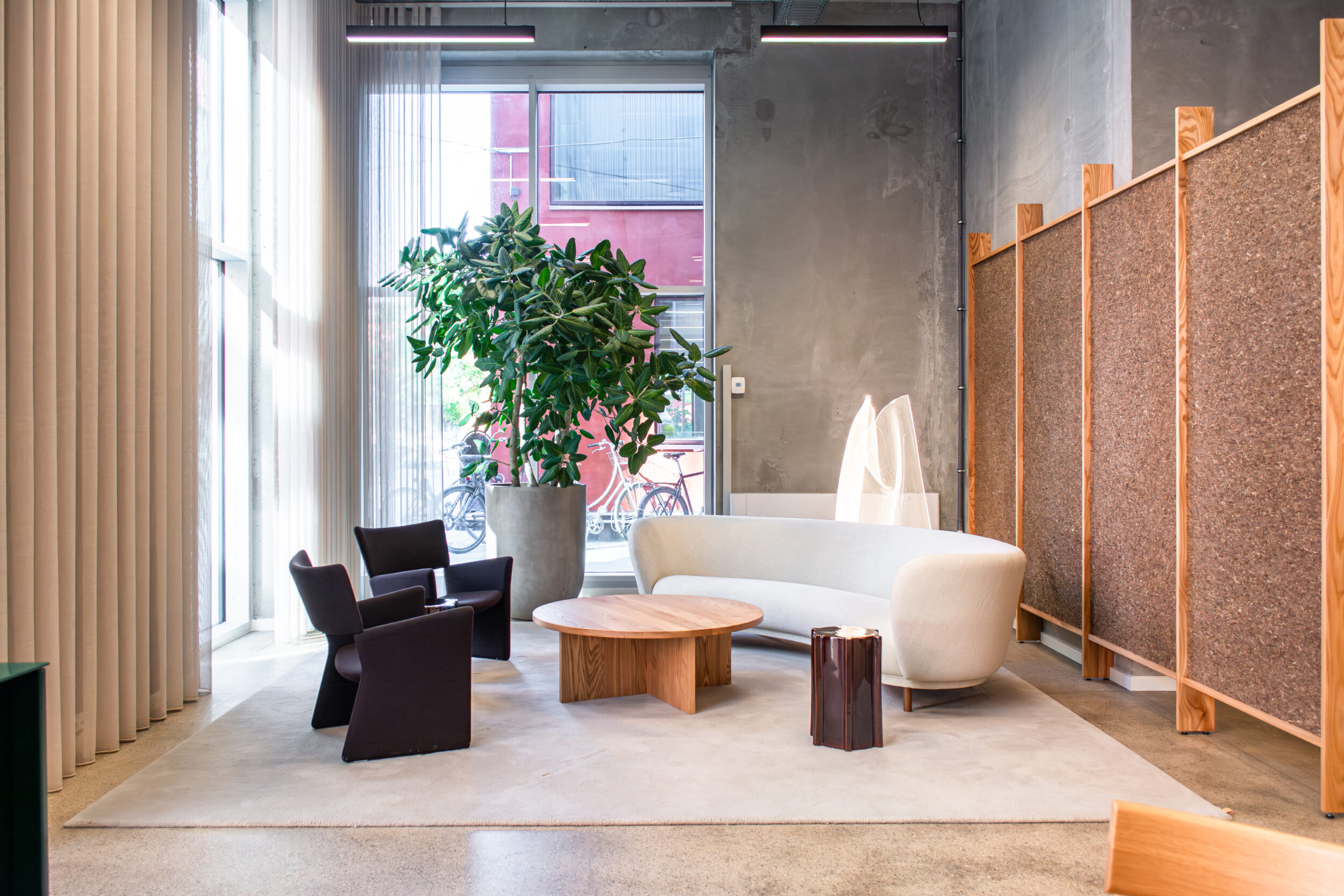
The ground floor follows the building’s east–west orientation and establishes a direct relationship with the surrounding urban landscape. To the east, a generous entrance is defined by a lounge area and a large communal table. Towards the west, the space becomes more intimate and flexible, with smaller seating arrangements and meeting rooms that reflect the narrower street outside. The openness and permeability of the ground floor create an outward-facing workspace that is intended to be completely integrated with the life of the city around it.
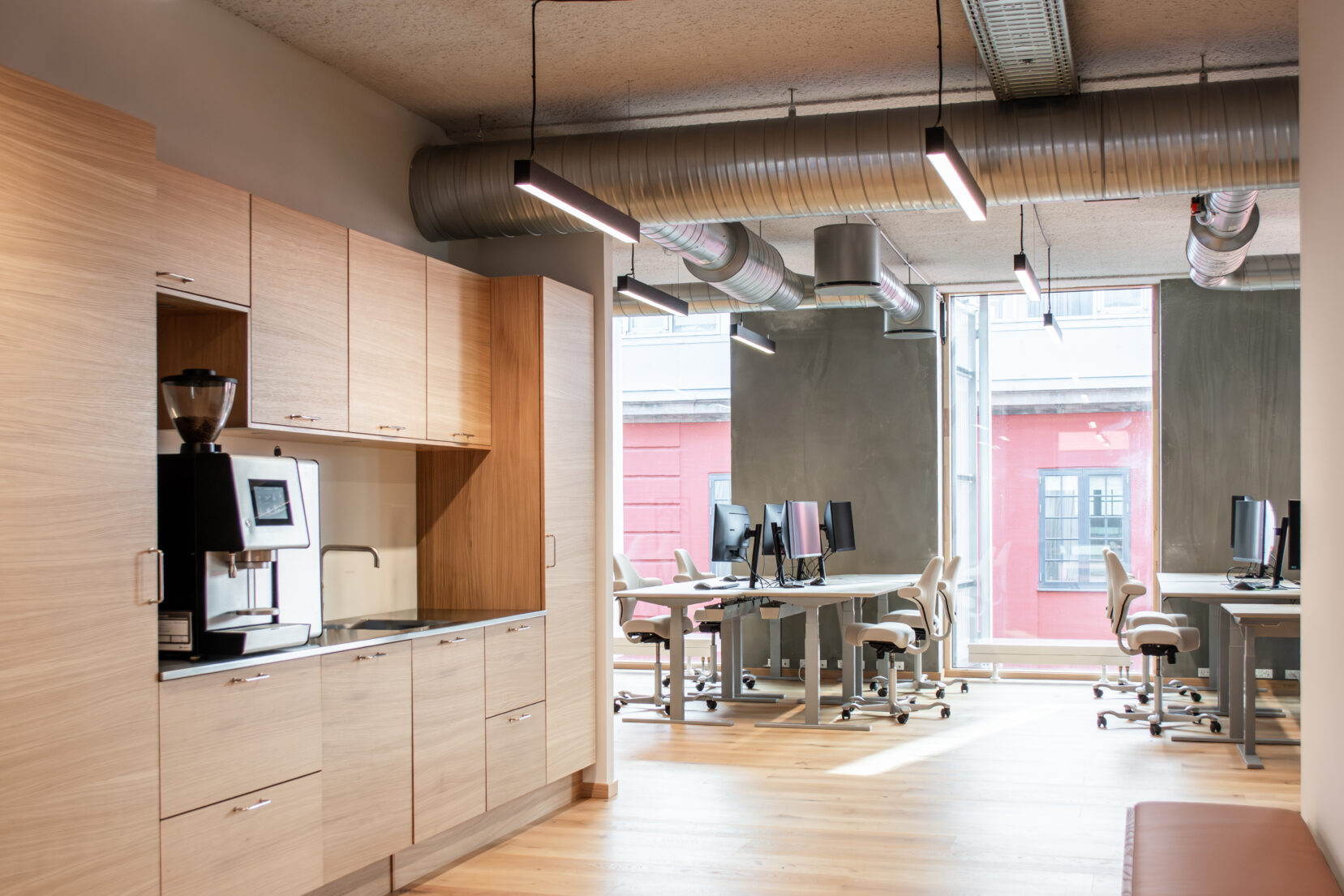
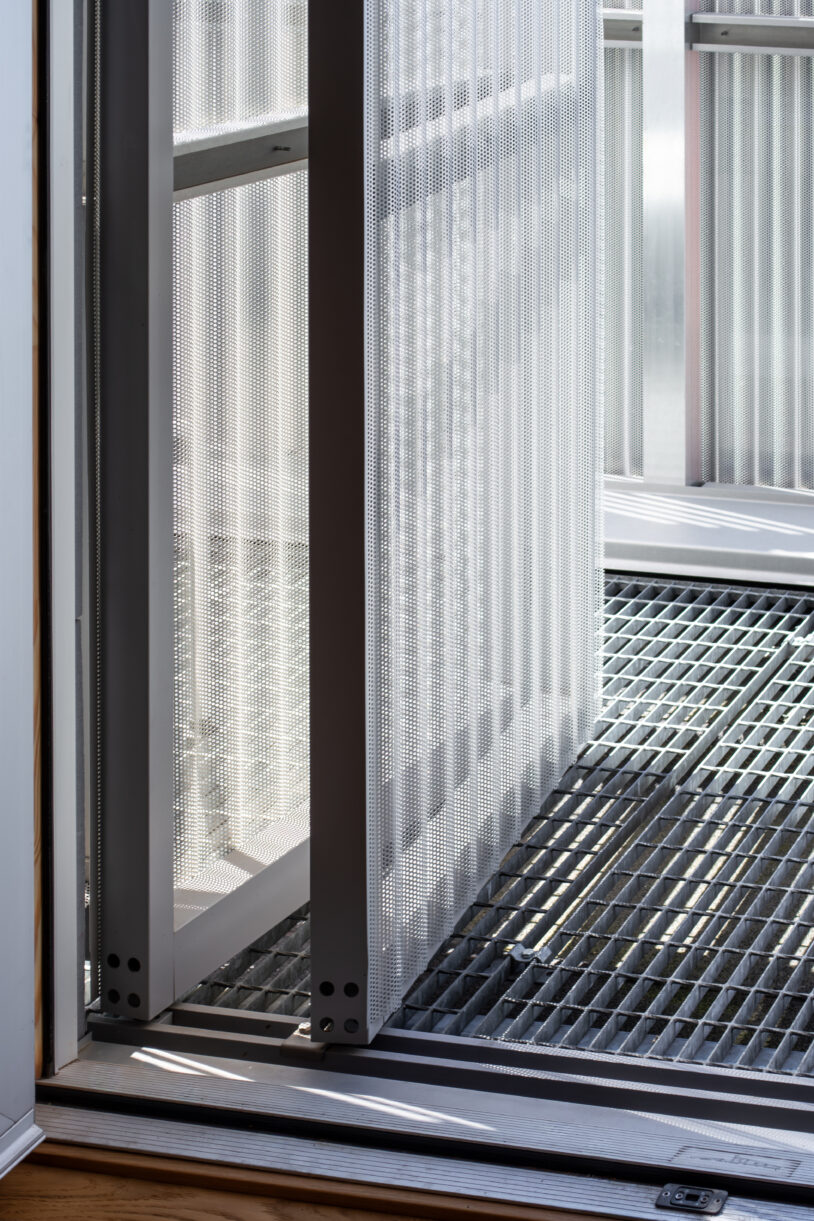
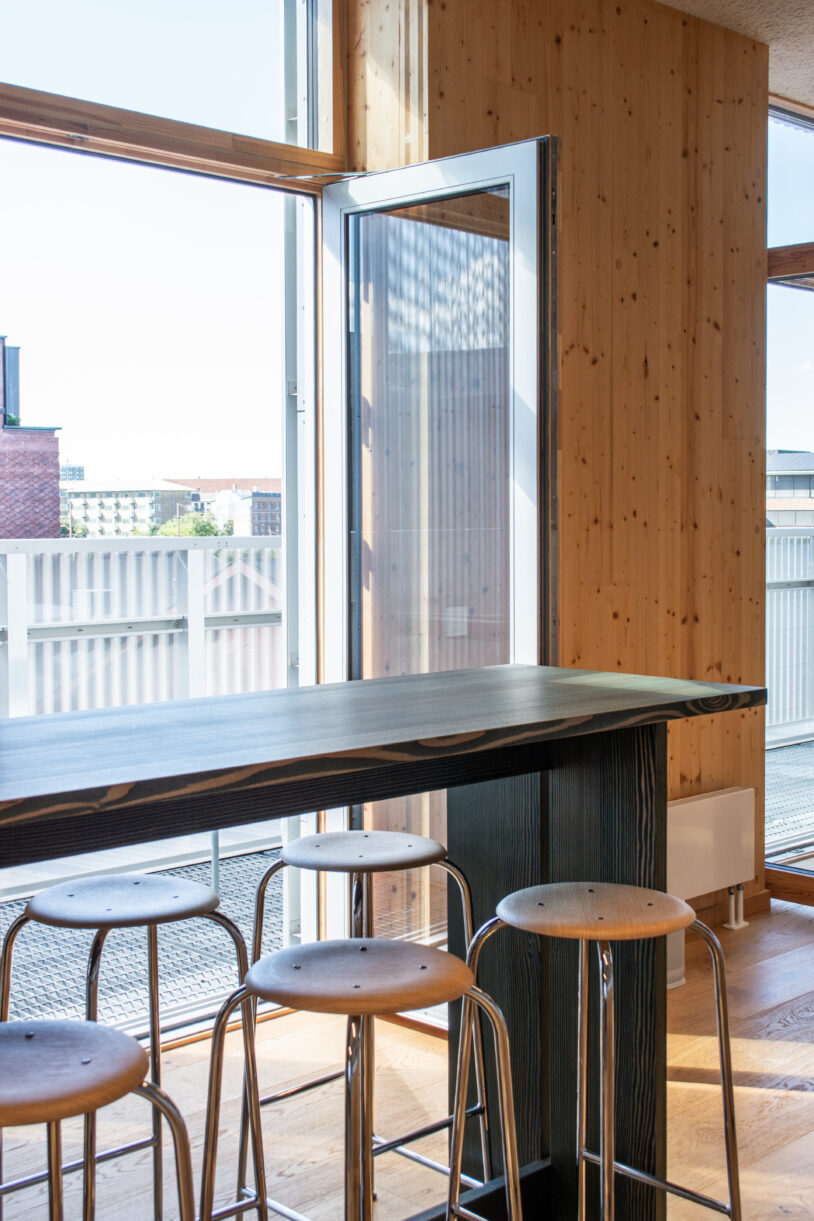
On the first, second, and third floors, workstations are organised around two central cores. The perforated façade, composed of operable corrugated solar screens, allows users to regulate light, openness, and privacy. This supports a highly adaptable working environment, where spaces can be adjusted according to changing needs. Flexibility and user control has genereally been central to the design, enabling a range of work modes across the building.
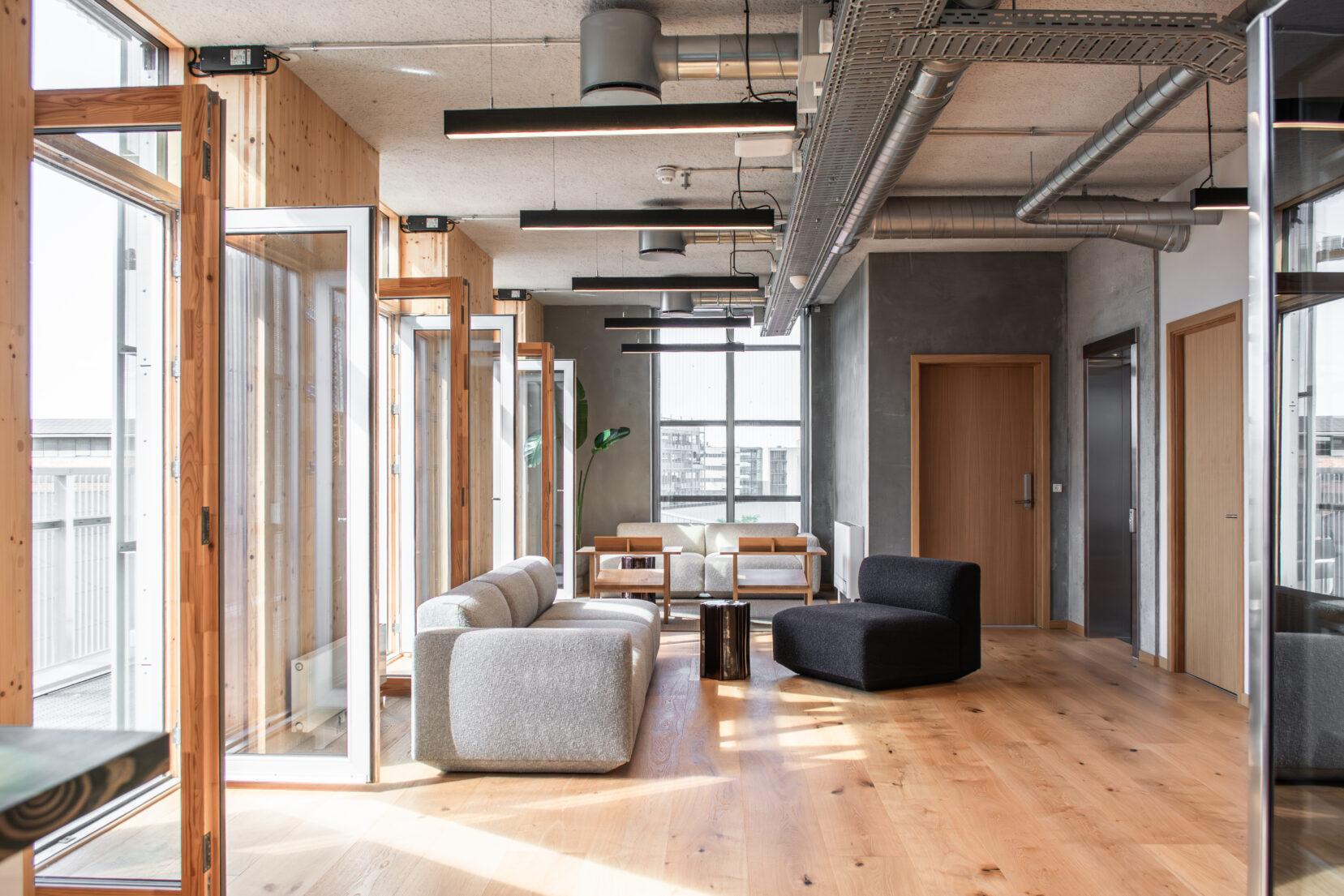
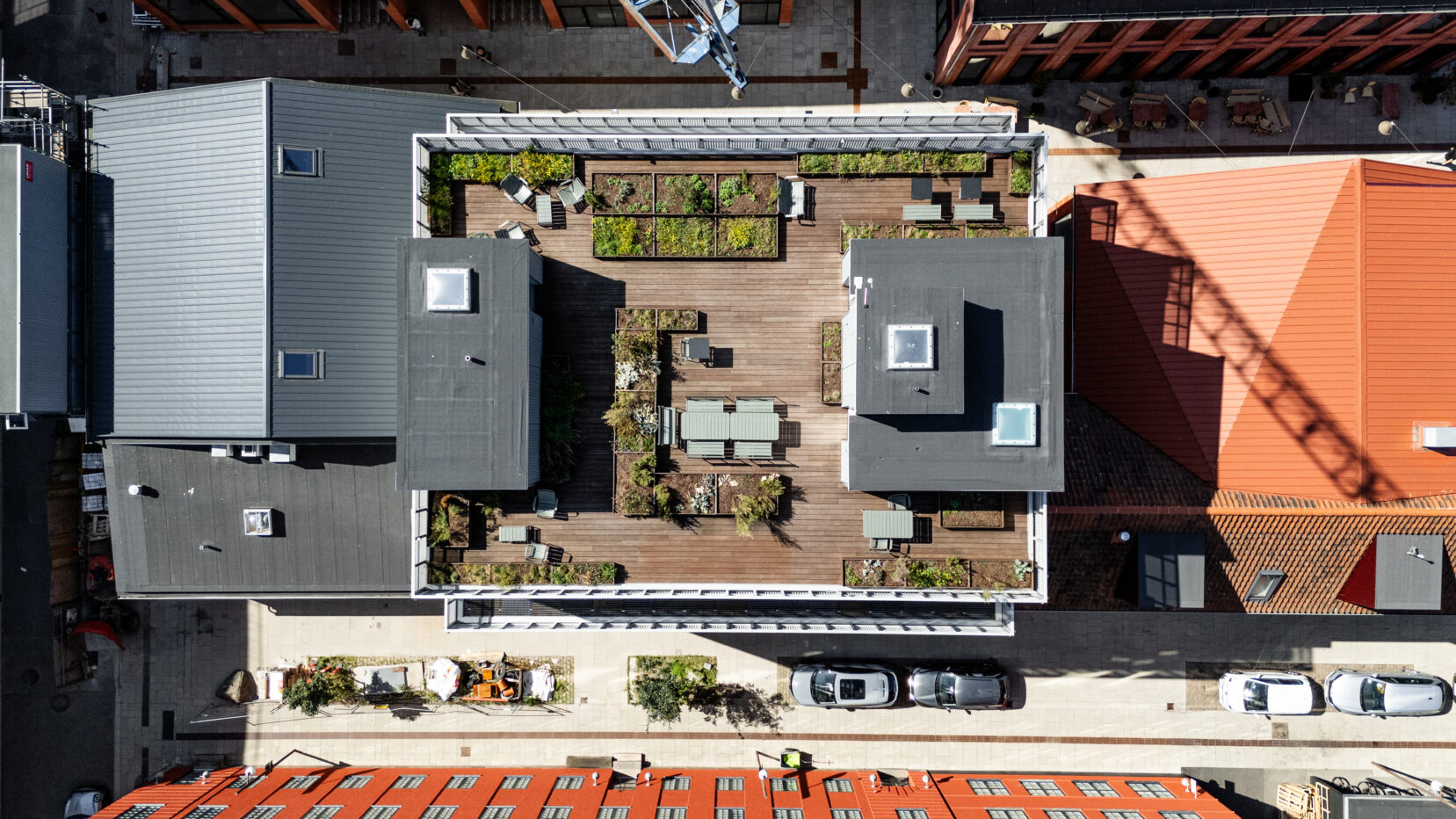
The top floor is conceived as a more secluded workshop environment, taking advantage of its quieter position within the building. Above, a roof terrace and small garden provide informal spaces with views across Den Røde By and its intimate urban scale.
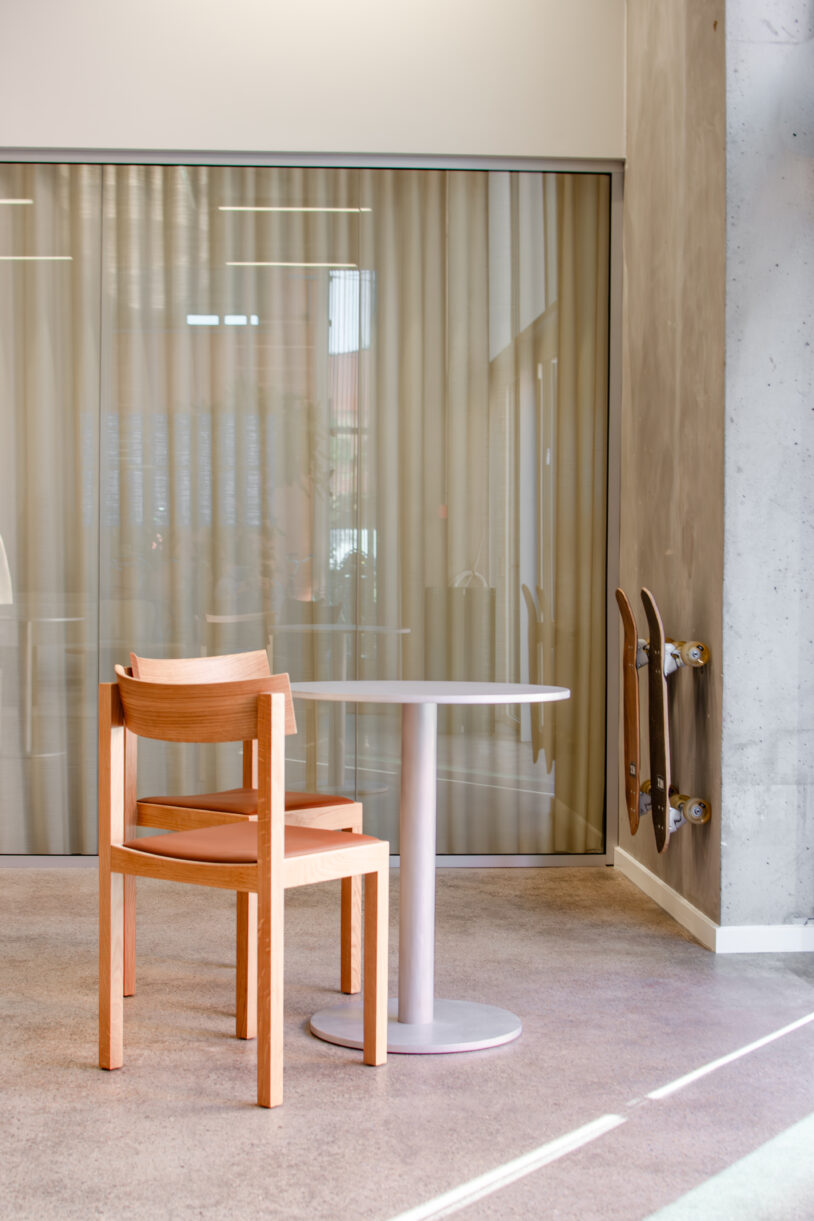
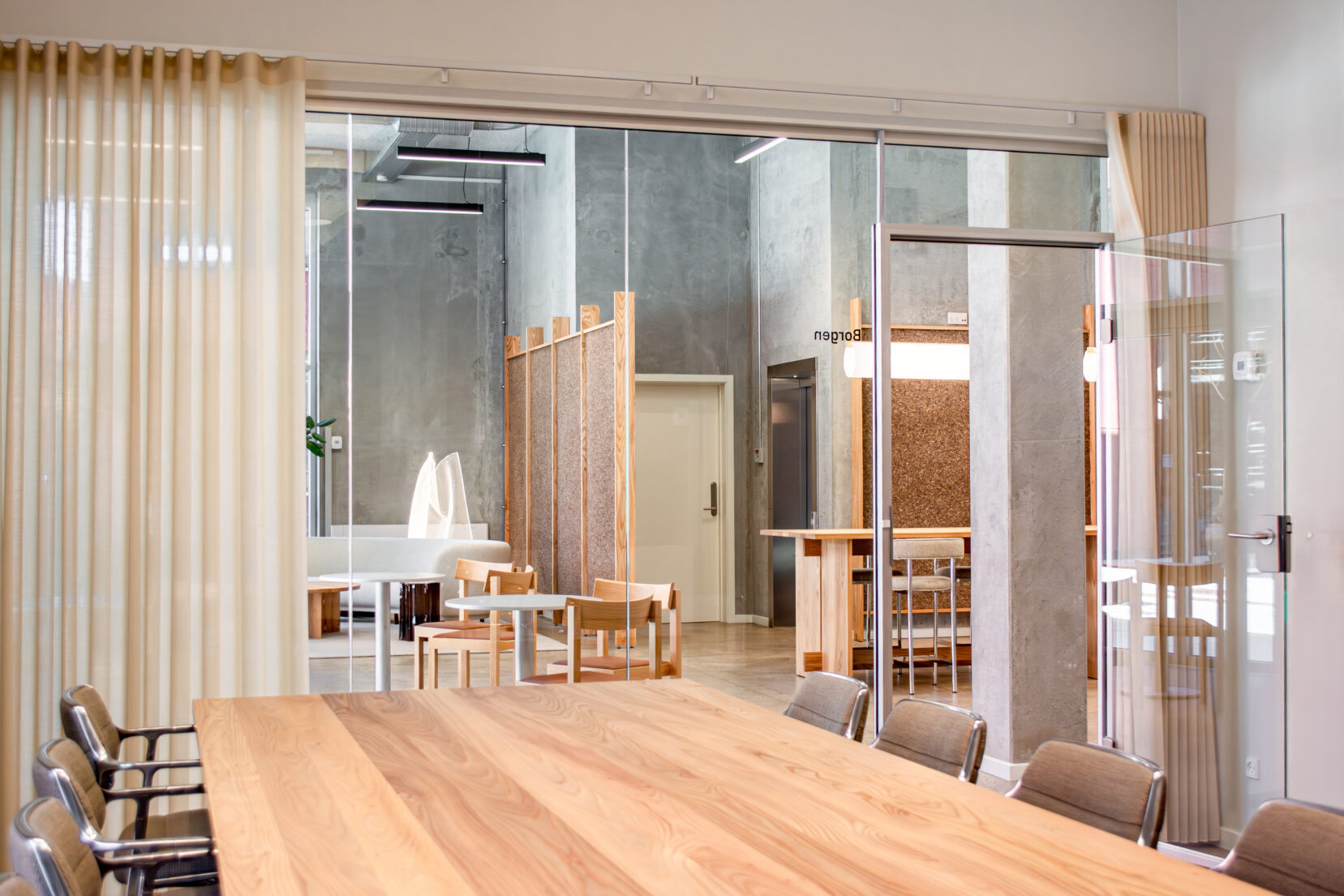
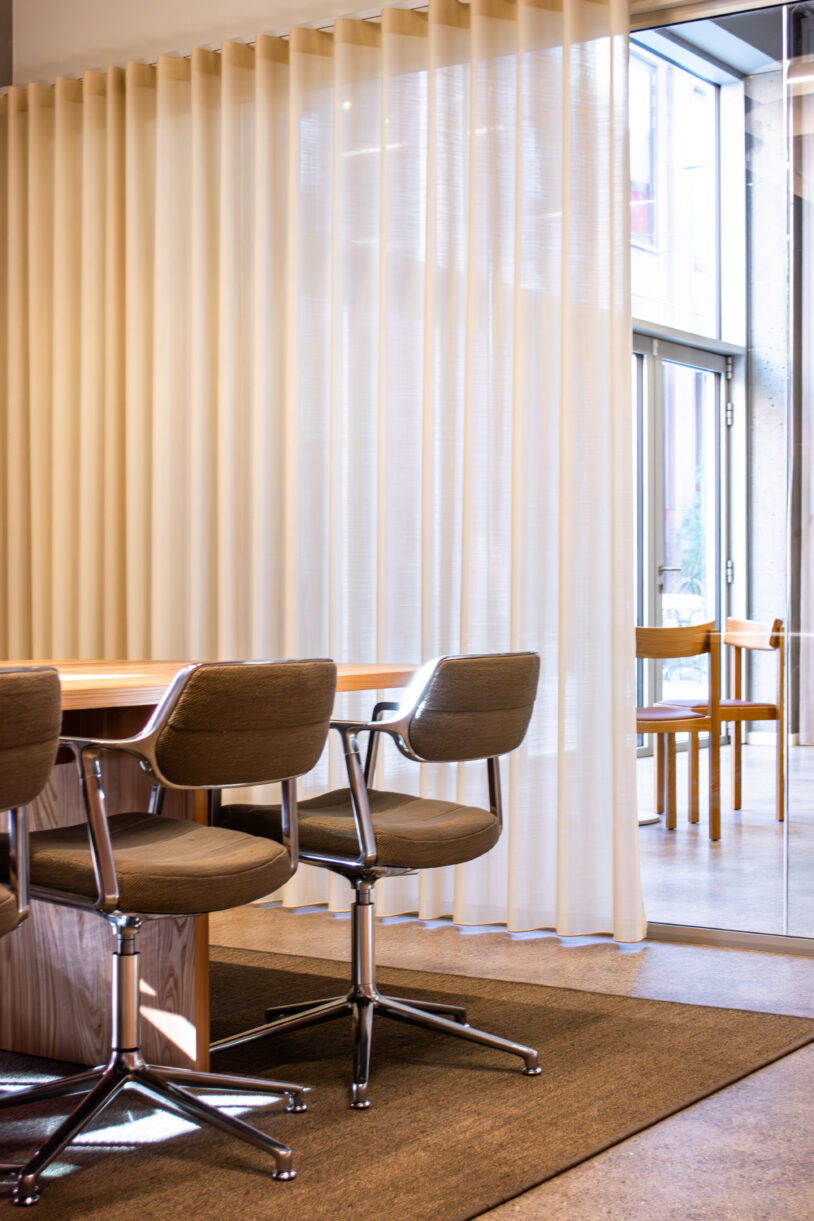
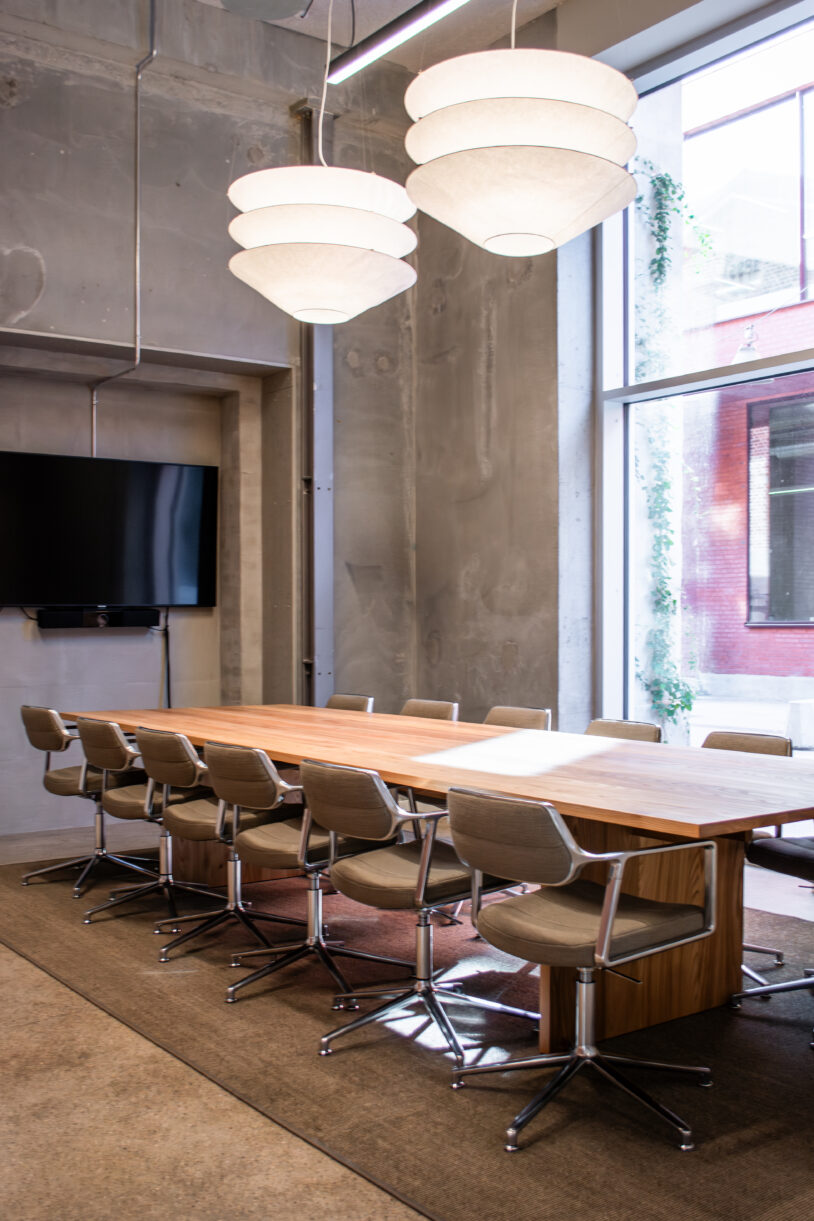
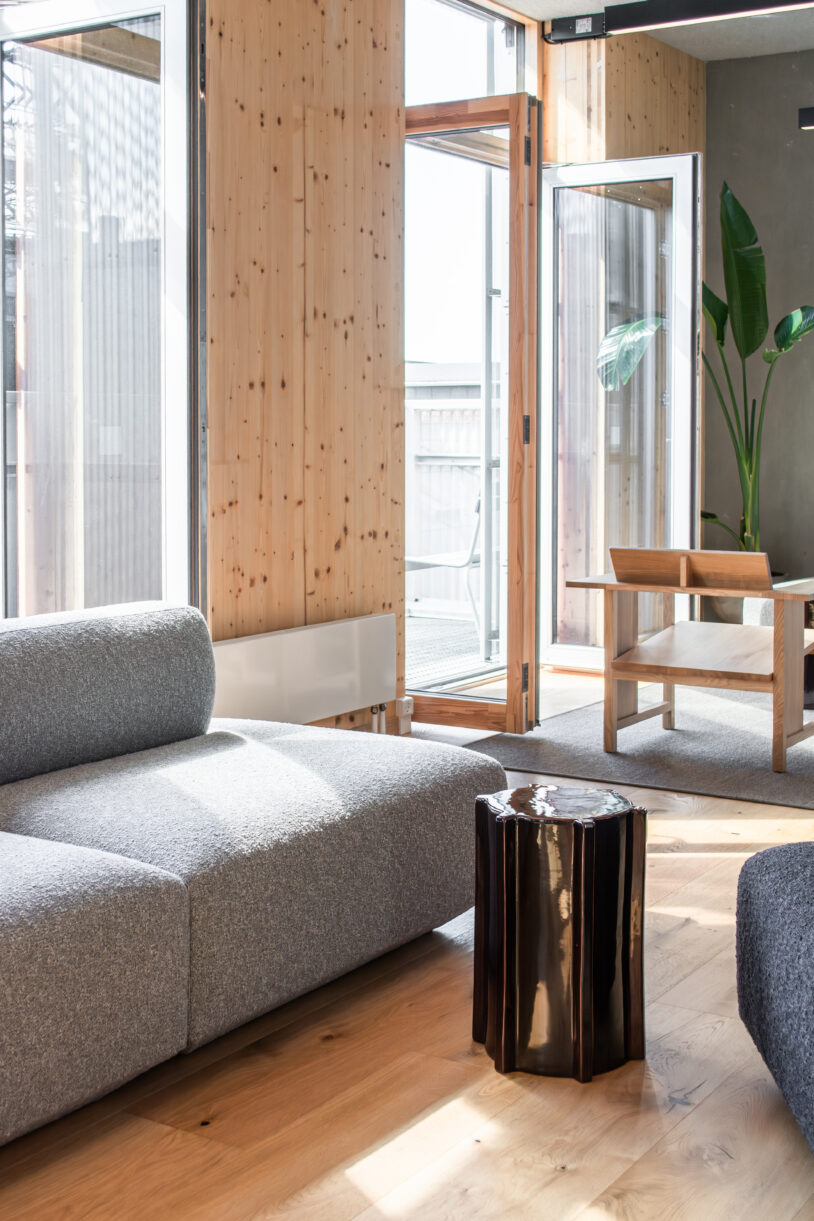
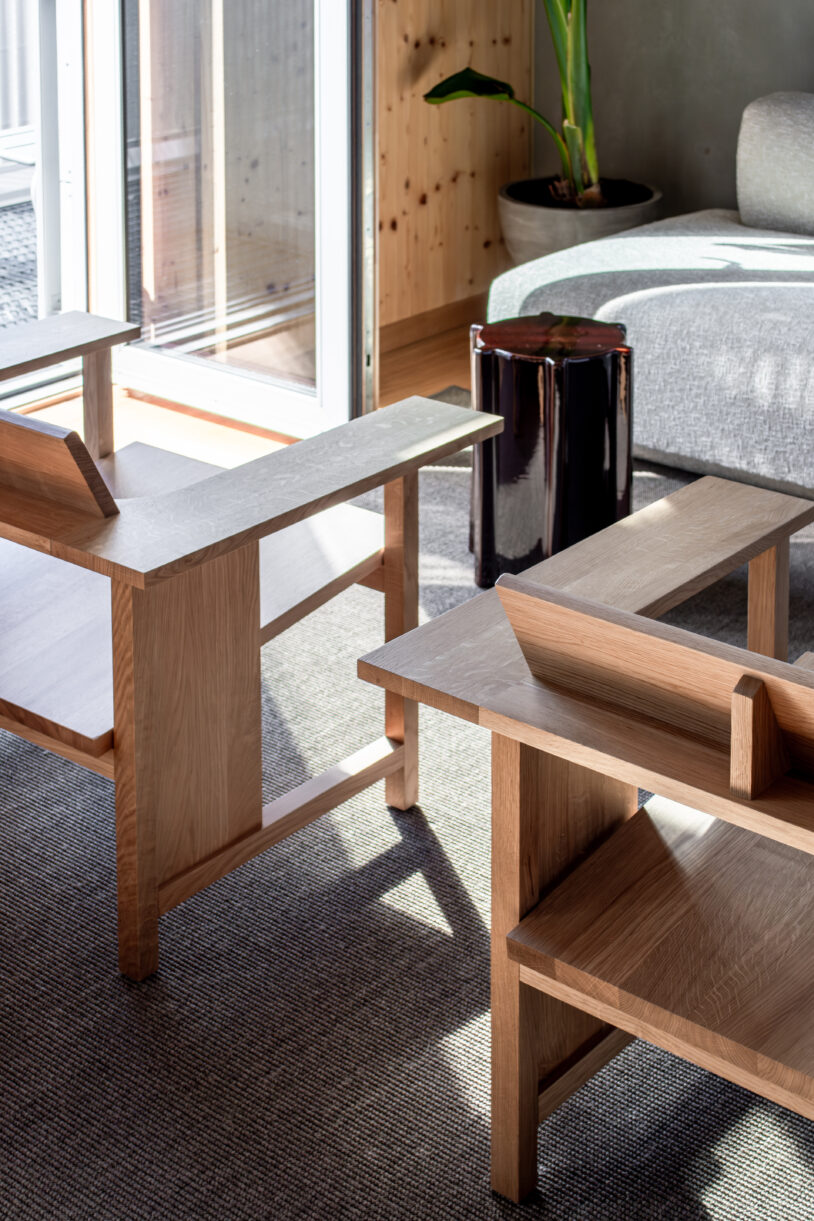
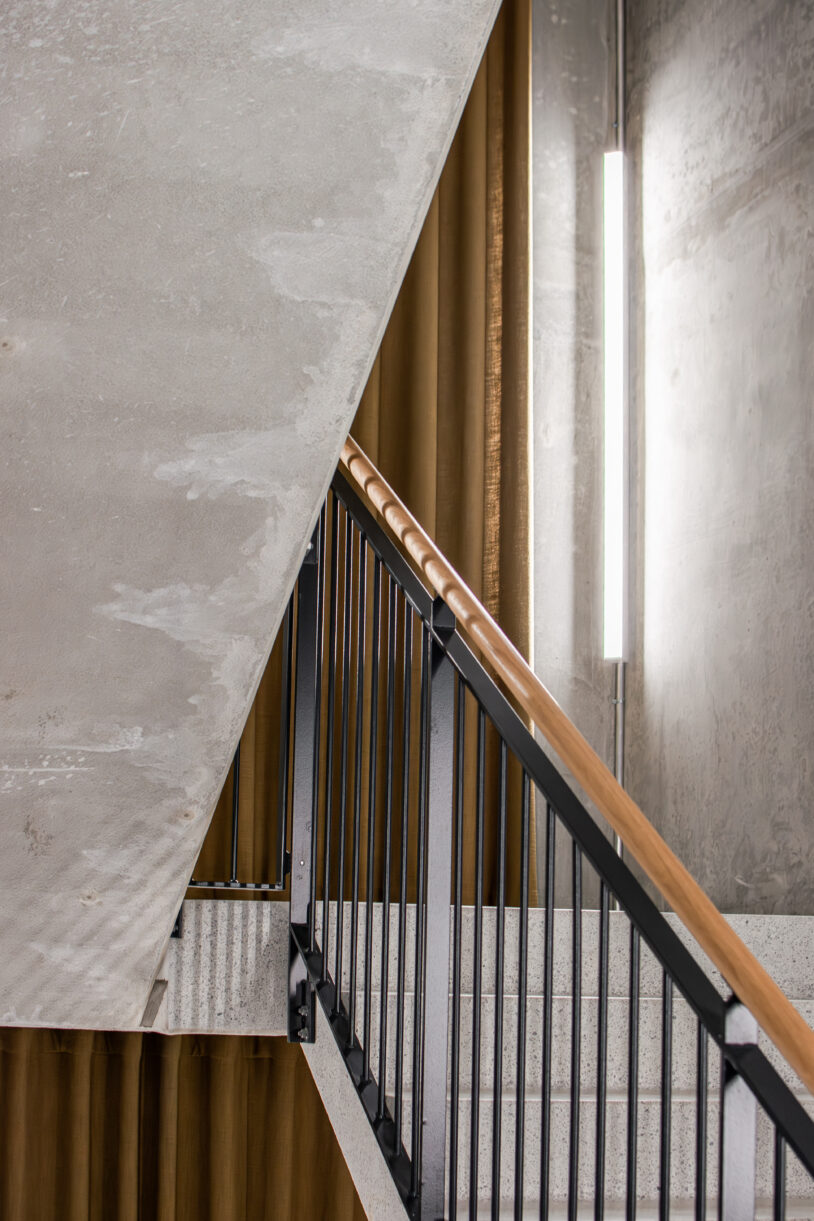
While the building expresses a contemporary and industrial character, wood plays a defining role in the interior experience. A CLT structural frame introduces warmth and tactility, creating a deliberate contrast to the concrete surfaces. This material dialogue is continued through a palette of sustainable materials and bespoke elements, including eelgrass acoustic panels framed in wood that both improve sound conditions and subtly section the space.
The project reflects a holistic process, where BRIQ’s involvement in both the surrounding exterior architecture and urban planning is distilled into a tailored work environment. It brings together BRIQ’s experience across architecture, workspace design and urban development into a workplace that is both specific to its users and closely connected to its surroundings.