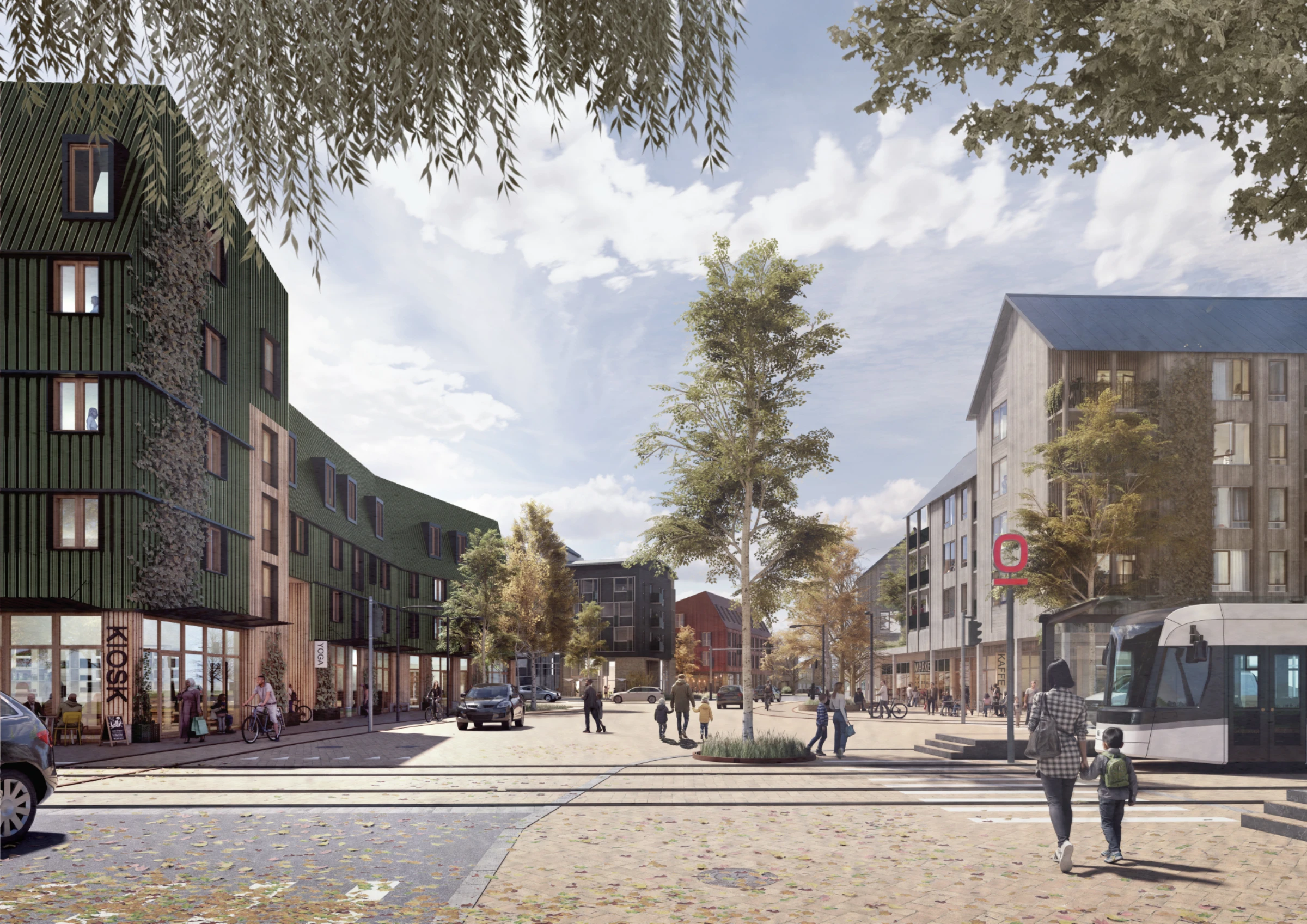
Kløverengkvarteret
BRIQ has been developing the overall urban life strategy for Fremtidens Vollsmose, the large scale transformation of Odense’s Vollsmose district. As a part of this project, we have also translated the strategy into a concrete commercial and urban life program for Kløverengen, the pilot neighborhood and first phase of construction.
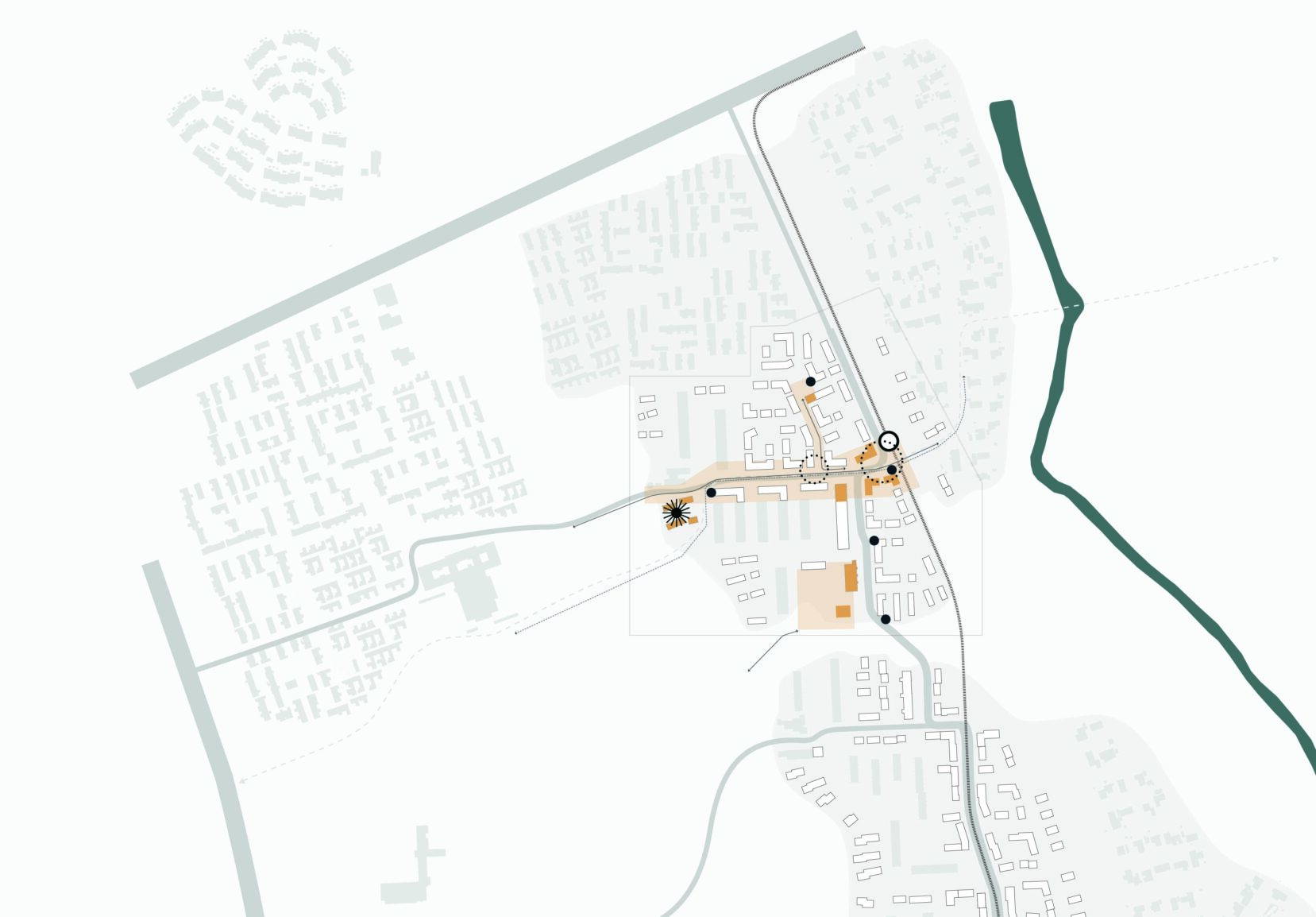
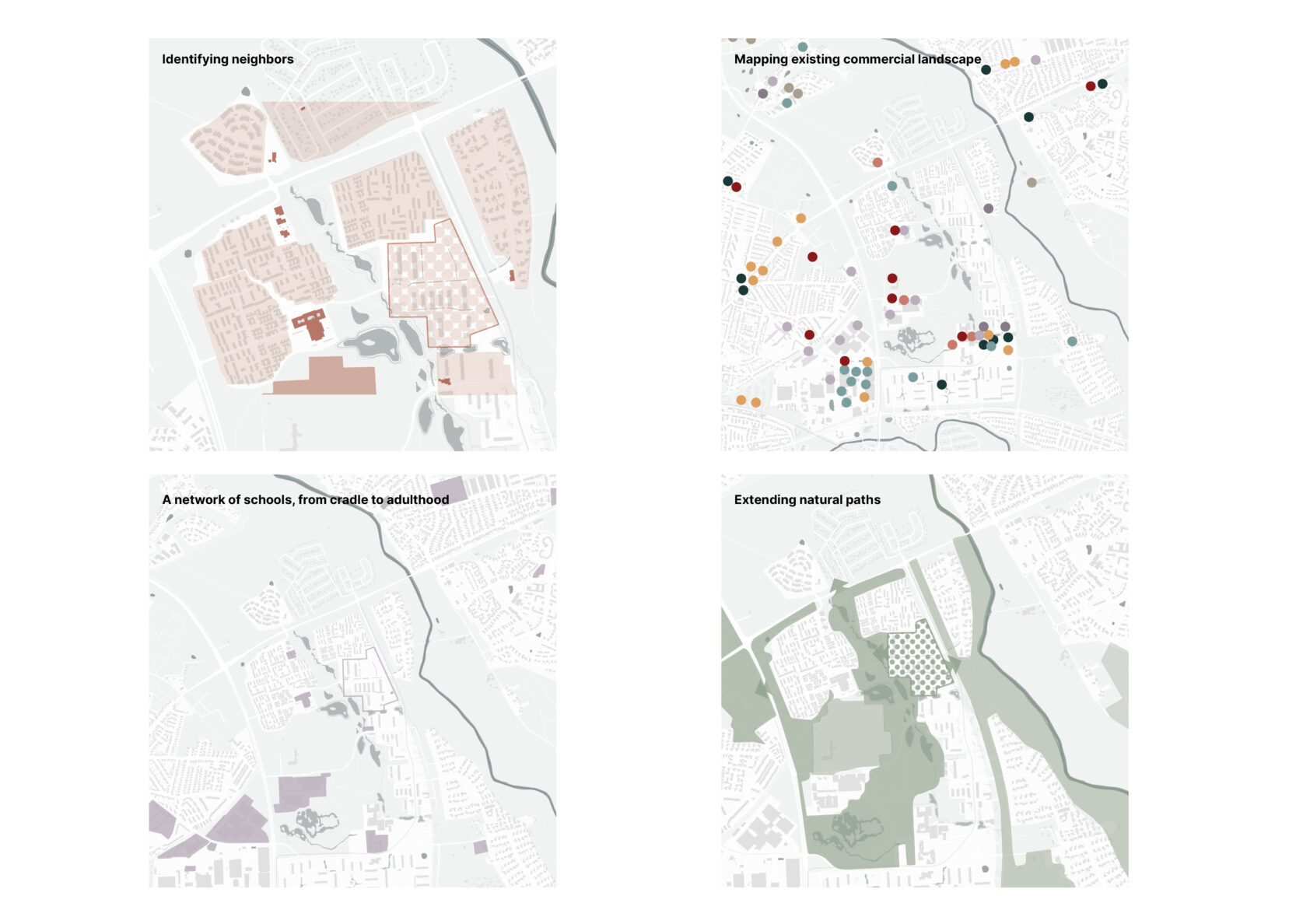
Our analysis of the existing area revealed a neighborhood surrounded by residential communities that lacks a genuine center of their own: everyday functions are scattered and car oriented, food and retail offerings are thin, and there is no shared destination to anchor daily life. Because Kløverengen is the first area to be built, and therefore sets the tone for everything that follows in Vollsmose, we treated this absence as an opportunity to define the new identity of the whole district from its very first step: an urban environment that invites others in and adds value to the surrounding hinterland.
A strong commercial program needs an existing foundation to build on, even as an entirely new spatial context is introduced to the neighborhood. Therefore, we identified and built on existing amenity value. While most structures are being refurbished, some smaller ones stood out for their potential as early commercial anchors, since they are already built and therefore cheaper. They can be activated immediately, becoming the perfect incubators for exciting commercial concepts. Its natural qualities are also high, as Vollsmose is enveloped in a lush and diverse landscape due to its history as a peat bog.
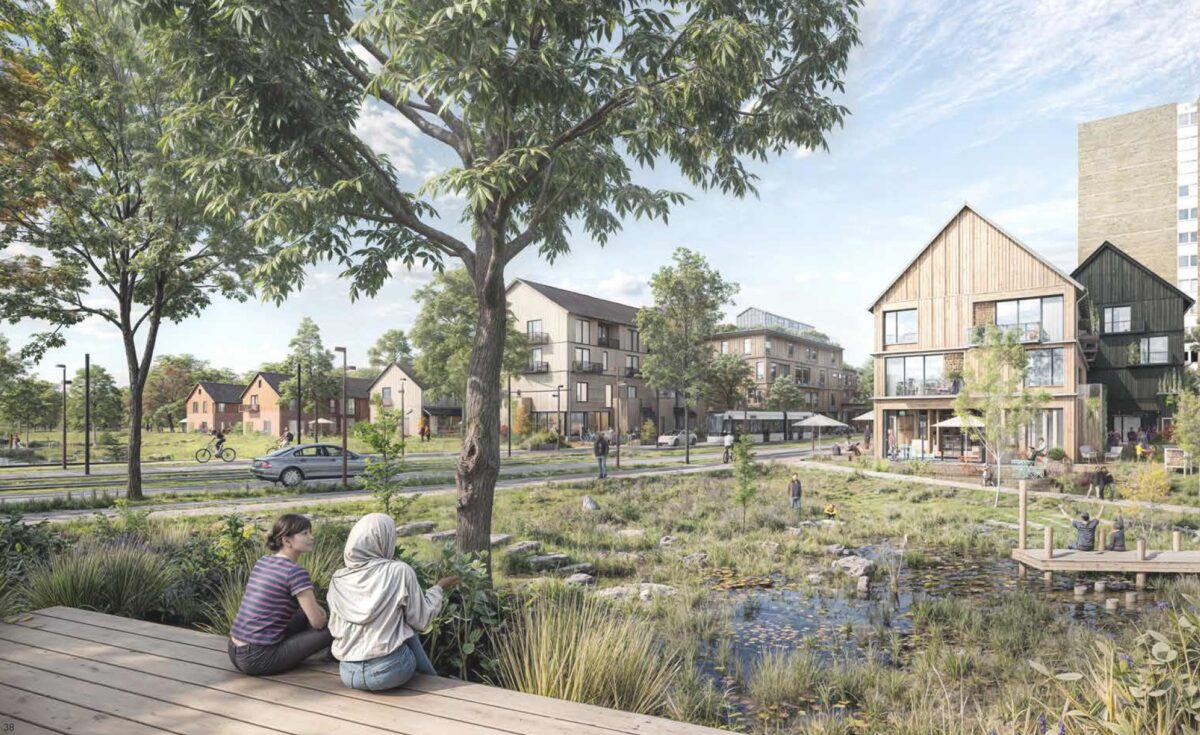
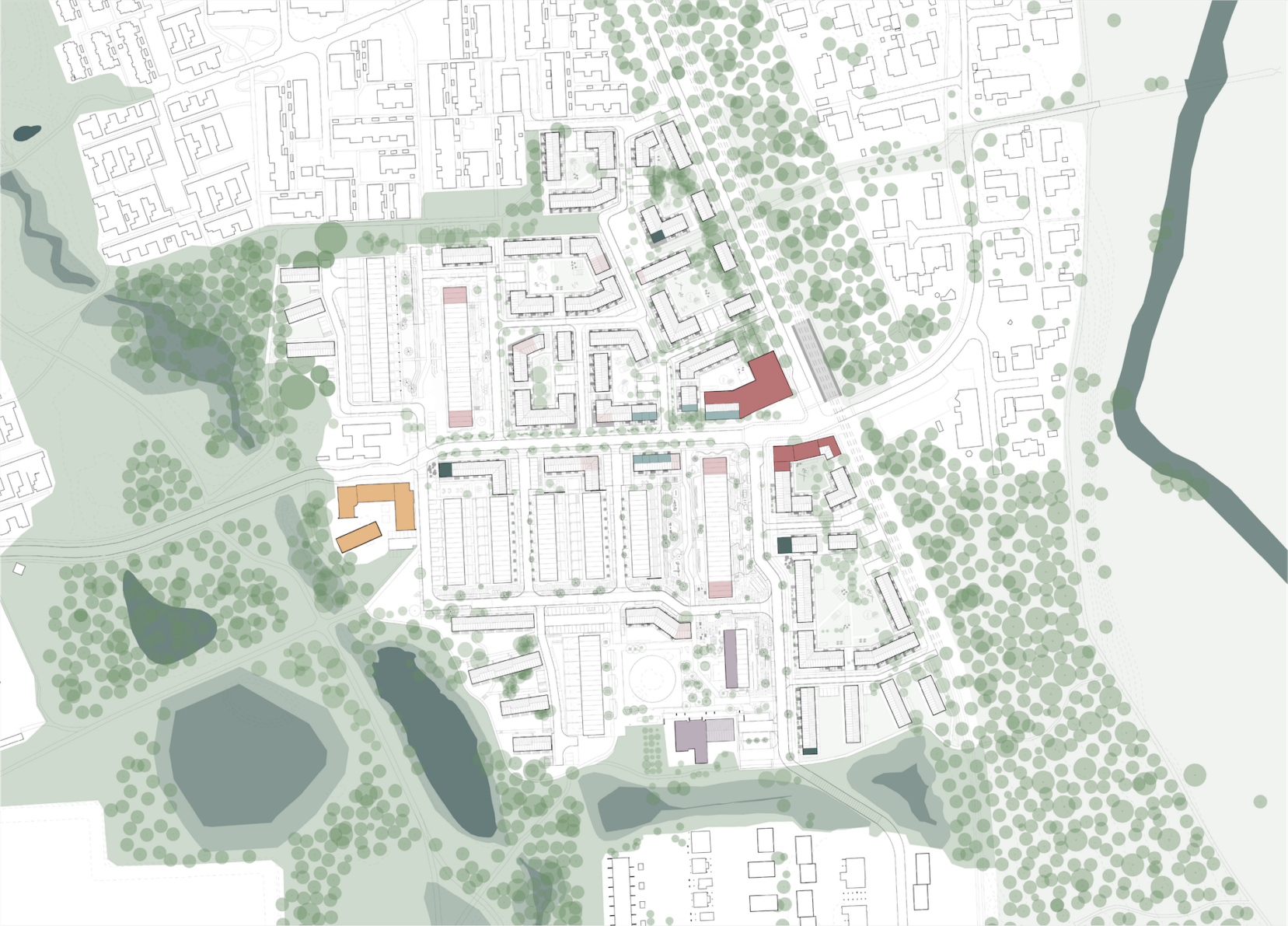
Our programming therefore placed particular emphasis on the advantages found in transformation and nature. First, we placed functions along the neighborhood’s green spaces that activate natural paths coming from Odense Å and the inner city, creating a sense of activity and safety there throughout the year as a revived recreational space. Second, we established a small number of strong, independent destinations in existing structures that can launch early, function on their own terms, and draw visitors from beyond the immediate area even before the rest of the neighborhood is built out. Alongside these destinations, we identified everyday anchor functions, oriented especially around the future public transit hub, to ensure that the neighborhood works as a local center for daily life for its residents and its neighbors.
Throughout, our recommendations were grounded in prioritizing local and community driven operators who can give the programming a character that is rooted in the place from the outset and bring their existing customer bases to into the new Kløverengkvarter.
Renditions by Vandkunsten and Arkitema. Bottom map underlay by Vandkunsten.